
Step 1
Build Your Deck
Use exactly 50 cards, including exactly 1 Land card. You may include up to 4 copies of a card with the same name, unless that card page says it is banned or limited.
How to Play
Start with the basic flow: build a 50-card deck, defend your Land Life, summon creatures, play Boosts, and win by reducing your opponent's Land Life to 0 or leaving them unable to draw.
Step 1
Use exactly 50 cards, including exactly 1 Land card. You may include up to 4 copies of a card with the same name, unless that card page says it is banned or limited.
Step 2
Players may flip a coin or roll a 6-sided die to choose who goes first. Each player places their Land, shuffles, draws 5 cards, and the first player begins at the Draw Phase.
Step 3
A turn moves through Draw, Boost, Battle, and End phases. Boost cards and creature summons happen during your Boost Phase unless a card says otherwise.
Step 4
Creatures battle opposing creatures by strength. If your opponent has no creatures, your creature can attack their Land Life directly. The first player draws on their first turn, but cannot attack during that first turn.
Card Anatomy
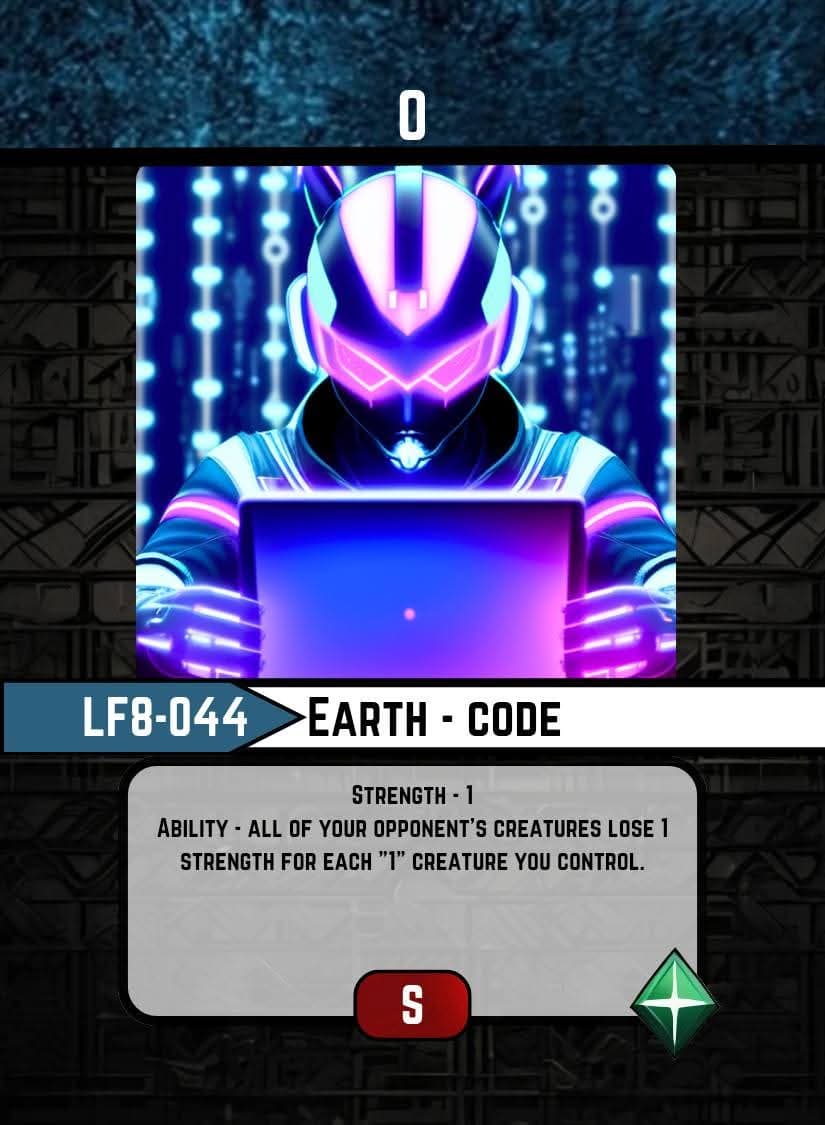
Card name
The title at the top of the card.
Card number
The printed set/card number, such as LF8-187 or LF2-001.
Type line
The card type or creature type, such as Land, Boost, Attachment, Earth - Warrior, or Majestic - Dragon.
Text box
Rules text, abilities, and effects that explain what the card does.
Size or card marker
Creatures can be Small, Medium, Large, or special types. Boosts, Lands, and Attachments use their own bottom marker.
Rarity symbol
Green is Common, red is Rare, purple is Full Art, and special red/chrome treatments indicate Chromatic Rare or Red Rare cards.
Quick Strategy
Your Land is your life total and can also strengthen creatures. Pick a Land that supports the creatures you want to command.
Regular Boosts are usually for your own Boost Phase. Boost - Interrupt cards are the exception and can respond at special moments.
Always check a card page for legality, copy limits, errata, and rulings before tournament play.
Rules Appendix
Deck construction:
Each deck contains exactly 50 cards.
Each deck must include exactly 1 Land card.
Each deck may include up to 3 L Creatures.
Each deck may include up to 4 copies of any card with the same name except L Creatures or if a card specifically states otherwise in its ability text.
What you need to play:
One 50-card deck per player.
A pen and notepad, or two or more 20-sided dice.
Some cards may require a six-sided die.
How to win:
Reduce your opponent's Land Life to 0.
If your opponent attempts to draw during their Draw Phase and has 0 cards in their deck.
Your Land card represents your life in the game. Each player starts with 40 Land Life and places 1 Land card on the field before the game begins.
Boost cards can only be played on your turn unless they are Boost - Interrupt cards.
Boost cards cannot target or affect themselves unless a card specifically states otherwise.
A Boost card cannot choose itself as a card "on your side of the field" unless it specifically says it can.
Boost - Interrupt cards can be played by either player during any turn and any phase.
You cannot play regular Boost cards during your opponent's turn.
A Boost and a Boost - Interrupt are on the field until they resolve so all players know what is happening, but they are not considered on the field for any card abilities.
After a Boost card's effect resolves, destroy that Boost card and place it in the Ruins unless it is Boost - Continuous.
Boost cards can produce many effects, including drawing cards, searching cards, destroying your opponent's creatures, gaining Land Life, and more.
Creatures are the main way to win the game.
Creature cards have a type. You usually want your creature types to align with your Land card so your creatures can become stronger.
Example:
Main Type: Dark
Sub Type: Zombie
Dark - Zombie
Creatures have Strength, which is used during battle.
During your Battle Phase, you may attack your opponent's creature with one of your creatures. If your creature has higher Strength, destroy your opponent's creature. If your creature has lower Strength, destroy your creature. If both creatures have the same Strength, destroy both creatures.
Each creature can attack only once per turn unless a Boost or ability allows it to attack more than once.
Creatures can attack during the same turn they are played unless a card specifically says otherwise.
Each creature can attack only once per turn.
If your opponent controls no creatures, you may attack your opponent's Land Life directly. If you do, your opponent subtracts your attacking creature's Strength from their Land Life.
You can control only 1 L Creature at a time.
If a creature's Strength is reduced to 0 by a card ability, destroy that creature.
If multiple creatures are destroyed at the same time, they are sent to the Ruins simultaneously.
Each player rolls a die. The player with the highest roll chooses who goes first.
Each player places their Land card on the field.
Each player shuffles their deck and draws 5 cards.
The player going first starts the game at the Draw Phase.
Draw Phase:
The turn player draws 1 card.
The first player draws on their first turn but cannot attack during that first turn.
There is no hand limit; therefore, you can have as many cards in your hand as you want without having to discard.
Boost Phase:
The turn player may play Boost cards, Creatures, and Attachments.
Battle Phase:
The turn player may attack once with each creature.
The turn player is not required to attack.
The turn player is not required to attack with every creature.
End Phase:
The turn player ends their turn, and the opponent begins their turn.
Each player has their own playing field.
Deck Zone:
This is where you place your deck.
Ruins Zone:
Destroyed creatures go to the Ruins.
Discarded cards go to the Ruins.
Creature Zones:
Each player has 6 Creature Zones.
Unless a creature is destroyed or removed from the field, it remains in one of the 6 Creature Zones.
Land Zone:
This is where you place your Land card at the beginning of the game.
If a creature ability requires a stack it will be displayed as Ability – Stack 1.
The number following Stack is how many cards have to be stacked underneath that creature. So if it is Stack 1, then it requires 1 card to be stacked underneath it.
When a creature with stacked card(s) beneath it leaves the field, the stacked card(s) are sent to the Ruins.
When stacked card(s) are sent to the Ruins this way, effects that activate when a card is sent to the Ruins do not activate.
A stacked card is not considered what the card actually is, but rather just a stacked card.
Example:
If a creature has a "Boost Canceler" stacked underneath it, then it is simply considered a stacked card.
You must shuffle your deck after looking through or searching your deck.
In best 2-out-of-3 matches, each player may use a side deck of up to 10 cards. Between games, each player may swap cards between their deck and side deck, but their deck must still contain exactly 50 cards, including exactly 1 Land card, at the start of each game.
You cannot activate a card during your opponent's turn unless the card says otherwise or it is a Boost - Interrupt card.
Whenever you activate a card, your opponent may respond before you play or activate another card.
A card activation occurs whenever a card is played or one of its abilities is activated.
If a card's activation is negated, none of that card's effects happen.
Example:
A Boost ability says:
"Pay 2 Land Life, return one card from your side of the field to your hand."
You activate that card and your opponent responds with a card that says:
"Negate the activation of a Boost card."
Then you will not pay 2 Land Life and you will not return a card from your side of the field to your hand.
Any Land ability that says "Once per turn" can only be activated during your Boost Phase unless it says otherwise.
Destroy:
When a card is destroyed, it is sent from the field to the Ruins.
Send to the Ruins:
A card that is sent to the Ruins is not considered destroyed unless a card specifically says it is.
Sacrifice:
When you sacrifice a card, send it from the field to the Ruins as part of paying a cost or resolving an effect.
Control:
You control every card on your side of the field unless a card specifically says otherwise.
Your Side of the Field:
Your side of the field includes your Land card, your creatures, your Attachments, and your Boost - Continuous cards.
Cannot:
If one effect says a player or card cannot do something, that effect takes priority over any effect that would allow it.
Card anatomy:
Card name: the title printed at the top of the card.
Set/card number: the identifier printed on the type line, such as LF2-001.
Type of card: printed beside the set/card number, such as Boost, Boost - Interrupt, Boost - Continuous, Attachment, Creature type, or Land.
Text box: the area that contains the card's rules or effect text.
Creature size or card type marker: the bottom badge, such as S, M, L, B, or A.
S – Small
M – Medium
L – Large
L – Land
B – Boost, Boost – Interrupt, Boost – Continuous
A - Attachment
Rarity symbol: the gem icon near the lower-right of the card.
Rarity Symbols:
Common cards have a green rarity symbol.
Rare cards have a red rarity symbol.
Full Art cards have a purple rarity symbol.
Full Art is a special card treatment identified by the purple rarity symbol.
Chromatic Rare cards have the red-and-chrome rarity symbol.
Chromatic Rares can use any color scheme.
Red Rare is the highest rarity.
Red Rares have a red rarity symbol, red card text, a red set code box, and a special image filter.
Boost Cards:
Boost cards can increase creature Strength, draw cards, destroy opposing creatures, create combos, and more.
Standard Boost cards can be used during your Boost Phase.
Boost - Interrupt:
Boost - Interrupt cards are similar to regular Boost cards, but they may be played outside normal Boost timing when a card or rule allows an interrupt.
Boost - Continuous:
Boost - Continuous cards are similar to regular Boost cards, but they stay on the playing field indefinitely unless a card says otherwise.
Attachment Cards:
Attachment cards must be attached to one of your creatures unless the card says otherwise.
Only 1 Attachment can be attached to a creature at a time.
Attachments must be attached during your Boost Phase.
The only way to remove an Attachment is with a card that specifically removes it.
When the attached creature leaves the field, send the Attachment to the Ruins.
Creature Cards:
Creature cards have main types and may also have subtypes.
Each creature has Strength, and some creatures have abilities.
During the Battle Phase, creatures use Strength to battle and destroy opposing creatures.
If your opponent controls no creatures, your creature may attack their Land Life directly.
Creature Sizes:
Creature cards can be Small, Medium, or Large.
Small creatures require you to pay 1 Land Life.
Medium creatures require you to pay 2 Land Life, or sacrifice 1 Small creature or 1 Medium creature you control.
Large creatures require you to pay 4 Land Life, or sacrifice 1 Medium creature or 1 Large creature you control.
Land Cards:
Your Land card is your life in the game.
Each player starts with 40 Land Life and places 1 Land card on the field before the game begins.
Land cards can also boost creatures.
Example: if a Land card says "All Light creatures gain +1 Strength," then every Light creature on both players' fields gains 1 Strength.
Some Land cards have unique abilities that let you create combos with Creature cards and Boost cards.
If a Land ability says "Once per turn," it may only be activated during your Boost Phase unless a card specifically says otherwise.
Mutated Creatures:
Mutated Creatures do not have a size.
They must be summoned by their own card ability.
When a Mutated Creature leaves the field, the card underneath it goes to the Ruins.
(OPT) is short for Once Per Turn.